
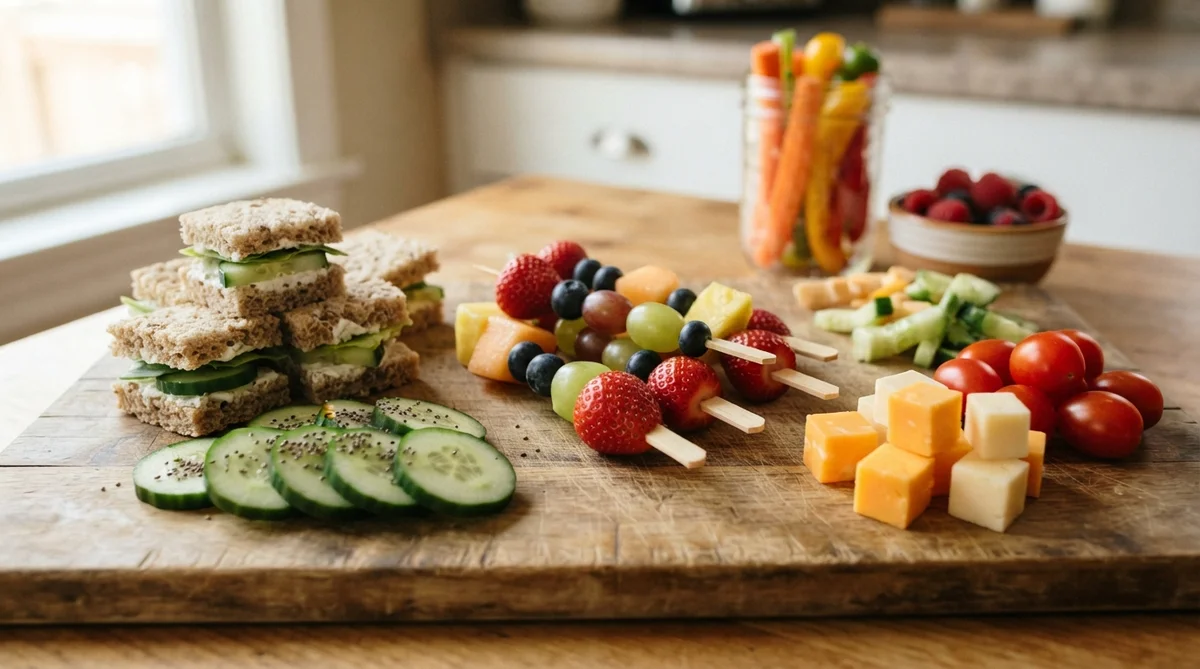
AT A GLANCE
A healthy lunchbox does not need complicated recipes: combine a whole-grain food, protein, fruit, vegetables, and water, then adjust the amount to your child’s appetite.
- Use the five-part formula: whole grains, protein, fruit, vegetables, and a calcium-rich food.
- Pack water every day and keep sugary drinks occasional.
- Prepare 2 or 3 components ahead to make weekday packing faster.
- Use an insulated bag, ice pack, and school allergy rules for food safety.
The right lunch depends on your child’s age, activity, appetite, allergies, and what the school allows.
How do you build a balanced kids healthy lunchbox guide with five simple components?
A balanced lunchbox can follow the Kid’s Healthy Eating Plate from Harvard T.H. Chan School of Public Health, using about half the meal for fruits and vegetables, one-quarter for whole grains, and one-quarter for healthy protein. Add a calcium-rich food if it suits your child’s diet.
- Choose 1 whole-grain main, such as whole-wheat bread, brown rice, whole-grain pasta, oats, or a whole-grain wrap.
- Add 1 protein, such as beans, egg, chicken, fish, tofu, hummus, edamame, nuts, seeds, or a suitable seed butter.
- Include 1 fruit and 1 or 2 vegetables in child-friendly pieces.
- Add 1 dairy or fortified dairy-free option, such as plain yogurt, cheese, or fortified soy yogurt.
- Pack water in a refillable bottle.
Harvard’s lunchbox guidance was checked in June 2026 and emphasizes variety, presentation, and meal preparation rather than a rigid menu.
What makes a filling main with whole grains and protein?
A filling main pairs a carbohydrate-rich whole grain with protein, which can help make the meal more satisfying than a refined-grain food alone. Try a hummus and chicken wrap, bean and brown-rice bowl, egg sandwich, or whole-grain pasta with peas and tuna.
- Spread hummus, mashed beans, or seed butter inside a whole-grain wrap.
- Add sliced chicken, turkey, egg, tofu, or cheese to a sandwich.
- Serve leftover brown rice, quinoa, or whole-grain pasta with beans, edamame, or shredded chicken.
How do fruit and vegetables add color and variety?
Fruit and vegetables add fiber, water, and a range of vitamins and minerals while giving children different colors, textures, and flavors to explore. Offer familiar choices first, then rotate one less familiar option without pressure to eat it.
- Pack apple slices, berries, melon, banana, orange segments, or halved grapes.
- Offer cucumber rounds, bell-pepper strips, steamed broccoli, carrot sticks, or cherry tomatoes cut safely for the child’s age.
- Pair vegetables with hummus, yogurt dip, guacamole, or another accepted dip.
Which dairy or calcium-rich alternatives work well?
Milk, yogurt, and cheese provide calcium, while fortified soy milk and soy yogurt can provide similar calcium and vitamin D amounts when the label confirms fortification. Pack plain or lower-sugar yogurt with fruit, a small cheese portion, or calcium-fortified soy yogurt.
Read labels when comparing products. Wylys Health’s practical guide to reading food labels can help you compare added sugar, sodium, fiber, and serving sizes.
Why is water the everyday drink?
Water supplies fluid without added sugar or caffeine and is suitable for routine school-day hydration. The Harvard guide, checked in June 2026, recommends a refillable water bottle and says sports drinks are generally relevant only for prolonged vigorous activity lasting more than 1 hour.
Children’s fluid needs vary by age, body size, weather, and activity. Ask a pediatrician about hydration if your child has a medical condition, takes medication that affects fluids, or regularly has symptoms such as dizziness or unusually dark urine.
What are healthy lunchbox food ideas by category?
The easiest healthy school lunch ideas come from flexible categories rather than a fixed recipe list. Choose one or two foods from each category, using familiar flavors and textures your child already accepts.
Which sandwiches, wraps, pitta, pasta, and grain bowls work best?
- Whole-grain sandwich with egg, lettuce, cucumber, and tomato.
- Whole-grain wrap with hummus, chicken, grated carrot, and bell pepper.
- Wholemeal pitta with falafel, cucumber, and yogurt dip.
- Whole-grain pasta with peas, sweetcorn, and tuna or beans.
- Brown-rice or quinoa bowl with edamame, avocado, and cooked vegetables.
The NHS Healthier Families guidance, checked in June 2026, recommends building the main item around bread, rice, pasta, or potatoes and choosing wholegrain where possible.
What are easy protein options?
- Hard-boiled egg, sliced chicken, turkey, salmon, or tuna.
- Hummus, roasted chickpeas, beans, lentils, tofu, or edamame.
- Peanut, almond, or sunflower-seed butter, only when permitted by school policy.
- Cheese, plain Greek yogurt, or fortified soy yogurt.
Which fruit and vegetable choices are practical?
- Choose fruit that needs little preparation, such as berries, bananas, satsumas, or apples.
- Cut firm fruit and vegetables into manageable pieces and use lemon juice on apple slices if browning affects acceptance.
- Keep washed cucumber, pepper, carrot, and broccoli in the refrigerator for quick packing.
Which yogurt, cheese, and dairy-free alternatives should you pack?
Choose plain or lower-sugar yogurt, a small cheese portion, cottage cheese, or calcium-fortified soy yogurt. Keep chilled foods cold and check the product label for added sugar, sodium, allergens, and fortification.
What counts as a healthier snack or occasional treat?
A snack should fill a gap between meals, not replace lunch. Pair a carbohydrate-rich food with protein or healthy fat, such as fruit with yogurt, whole-grain crackers with cheese, or vegetables with hummus.
The NHS guidance, checked in June 2026, suggests reducing crisps, sweets, cakes, biscuits, and sugary bars while keeping dried fruit with mealtimes because it can affect teeth. An occasional treat can fit without making the whole lunchbox less nutritious.
What are 10 balanced lunchbox combinations kids will actually eat?
These combinations use familiar foods and allow simple substitutions for allergies, preferences, or school rules.
- Whole-grain turkey sandwich, cucumber rounds, strawberries, and plain yogurt.
- Hummus wrap, bell-pepper strips, grapes cut lengthwise, and cheese.
- Egg and lettuce pitta, carrot sticks, melon, and water.
- Bean and brown-rice bowl, steamed broccoli, orange segments, and soy yogurt.
- Whole-grain pasta with peas and chicken, blueberries, and cucumber.
- Falafel, whole-grain crackers, cherry tomatoes cut safely, and yogurt dip.
- Tuna and sweetcorn sandwich, apple slices, snap peas, and milk if allowed.
- Tofu and quinoa bowl, edamame, pineapple pieces, and fortified soy yogurt.
- Sunflower-seed butter sandwich, banana, cucumber, and plain yogurt.
- Cheese and whole-grain pita, roasted chickpeas, berries, and sliced peppers.
How much food should you pack?
Pack enough for your child to eat comfortably during the scheduled meal, plus a small snack if the school day or activity schedule calls for one. There is no single portion that suits every child, so use the child’s appetite and school guidance rather than forcing a clean lunchbox.
How should you adjust portions for age, appetite, and activity?
- Start younger children with small portions and add more when they consistently finish hungry.
- Pack larger portions for older or highly active children, especially when lunch is followed by sports.
- Use the school timetable to judge whether a snack is needed 1 or 2 times during the day.
- Ask a pediatrician or registered dietitian about persistent poor appetite, rapid weight change, fatigue, or concerns about growth.
Why pack familiar foods alongside one new food?
A familiar main, fruit, or snack gives your child a reliable option while the new food provides low-pressure exposure. Keep the new portion small and avoid making dessert or screen time depend on trying it.
What lunchbox ideas help picky eaters?
Picky eaters often respond better to predictable foods, separated components, and repeated exposure than to bigger portions or pressure. A divided lunchbox can keep foods from touching and let your child choose the order of eating.
- Serve deconstructed meals, such as tortilla strips, chicken pieces, cucumber, and avocado separately.
- Offer two acceptable choices in one category, such as apple or berries.
- Keep textures consistent, for example crunchy vegetables together and soft foods in another compartment.
- Invite your child to wash produce, choose between fillings, or pack a napkin.
How can you make healthy lunches more appealing?
Presentation can increase interest without changing the food. Use colorful produce, bite-sized pieces, dips, and occasional shapes, while avoiding designs that add significant preparation time.
- Cut sandwiches into triangles or small squares.
- Use blunt-ended food picks for older children who can handle them safely.
- Pack a rainbow of two or three produce colors.
- Let children assemble wraps, pitta pockets, or grain bowls at lunch.
How do you save time with lunchbox meal prep?
The most efficient kids lunch box prep involves washing produce, cooking a few staples, and portioning ingredients once or twice each week. Do not prepare more refrigerated food than you can safely use within its storage window.
How can you prep ingredients once and mix them throughout the week?
- Wash and cut sturdy vegetables, then store them in sealed containers in the refrigerator.
- Cook a batch of brown rice, quinoa, eggs, beans, or chicken for several meals.
- Portion hummus, yogurt, nuts, or seeds into small containers.
- Pack the lunchbox the night before and refrigerate it overnight when possible.
Use the Wylys Health grocery strategies for eating well on a budget to plan overlapping ingredients and reduce food waste.
How should you use leftovers, freezer items, and batch-cooked foods?
Use chilled leftovers such as pasta, rice, roasted vegetables, or chicken only when they have been cooled and stored safely. Freeze bread, pitta, wraps, and some cooked foods in clearly labeled portions, then thaw them in the refrigerator rather than on the counter.
How do you keep school lunches safe and fresh?
Food safety depends on keeping perishable foods cold, preventing cross-contact with allergens, and preparing choking hazards safely. Follow the school’s written rules as well as the product’s storage instructions.
Why use an insulated lunch bag and ice pack?
Place perishable foods in an insulated lunch bag with a frozen ice pack and keep the bag out of direct sun. If the school provides a refrigerator, follow its instructions and label the lunchbox clearly.
Which foods need chilling?
Chill meat, poultry, fish, eggs, dairy, yogurt, cut fruit, cut vegetables, hummus, and cooked grains. Pack shelf-stable alternatives when reliable refrigeration is unavailable, such as unopened whole-grain crackers, whole fruit, or a sealed nut-free seed product.
How should you handle allergy-aware packing and school rules?
Check the school’s allergy policy before packing peanuts, tree nuts, sesame, dairy, egg, or other common allergens. Prevent cross-contact by washing hands, cleaning surfaces, using separate utensils, and labeling homemade foods with ingredients.
How do you prepare food safely for younger children?
Cut grapes and cherry tomatoes lengthwise, avoid whole nuts for young children, and slice firm raw vegetables into thin, manageable pieces. The safest shape depends on the child’s age and development, so follow pediatric choking-prevention guidance and supervise eating whenever possible.
What belongs on a simple healthy lunchbox checklist?
- Main: whole grain plus a protein.
- Produce: fruit and one or two vegetables.
- Calcium: yogurt, cheese, milk, or a fortified alternative.
- Drink: refillable water bottle.
- Safety: insulated bag, ice pack, allergy check, and age-appropriate cuts.
- Practicality: one familiar food, one optional new food, and a portion your child can finish.
Review school nutrition standards and allergy rules before each school year because policies can change, and recheck them in June 2026 or whenever the school issues an update.